
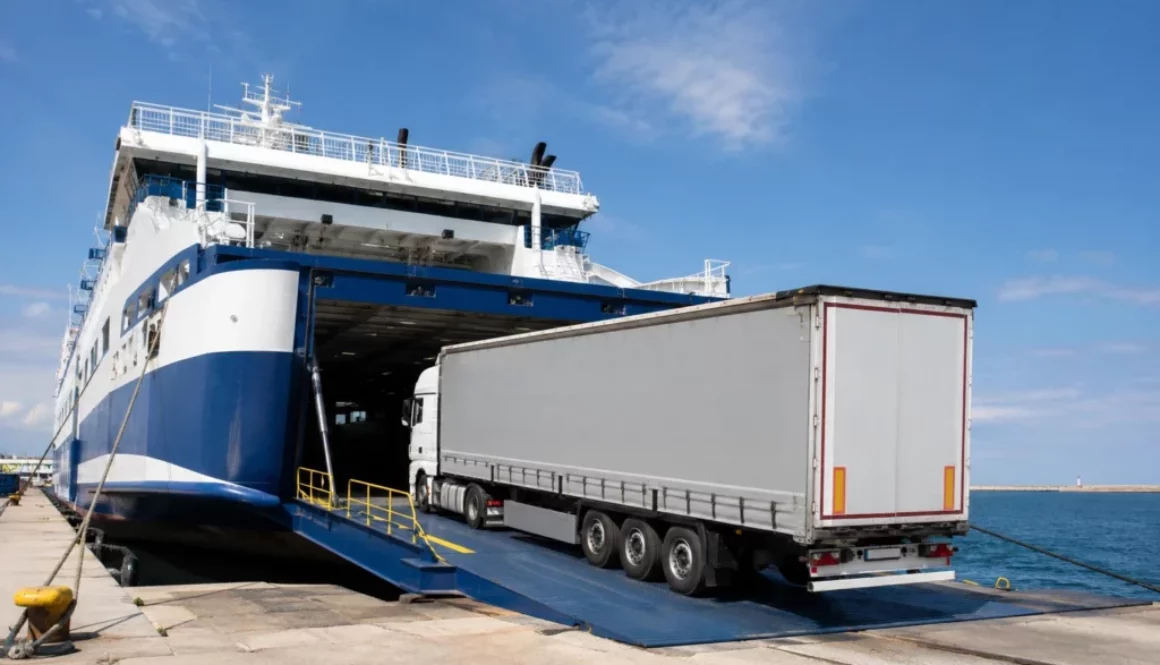
Ferry for Trucks: When Does It Make Sense on an International Route?
In international freight transport, the shortest route on a map is not always the most efficient one. When a truck needs to cover long distances, cross several countries or reach a destination separated by sea, using a ferry for trucks can be an effective alternative to completing the entire journey by road.
The decision should not be based solely on comparing the ferry fare with fuel costs. A transport operation needs to be assessed as a whole, taking into account road mileage, tolls, driving time, access to ports, sailing time, departure schedules, availability, vehicle specifications and delivery deadlines.
On certain routes, sea transport can eliminate a significant amount of road mileage. On others, inconvenient departure times or a port located too far from the origin or final destination can reduce or even eliminate that advantage.
For this reason, before booking a freight ferry, operators should compare the total cost and transit time of the complete journey.
When does using a ferry for trucks make sense?
There is no universal rule that determines whether a ferry is more cost-effective than an all-road route. Each operation is different, but there are several situations in which the maritime alternative deserves particular consideration.
When it reduces road mileage
One of the main reasons for using a ferry for trucks is to avoid hundreds of kilometres of road travel.
The advantage can be particularly significant when geography forces vehicles to make a substantial detour by road. A sea connection may link two points more directly and considerably reduce the distance the truck needs to cover.
However, the maritime leg cannot be considered in isolation.
The calculation should include the distance from the origin to the departure port, the sea crossing, the distance from the arrival port to the final destination and the time required to enter and leave the port facilities.
The correct approach is therefore to compare both alternatives door to door.
When it improves driving-time planning
In international road transport, available driver hours have a direct impact on route planning.
An entirely road-based journey may require several periods of driving and rest before the vehicle reaches its destination. Adding a sea crossing changes the operational structure of the journey and may be advantageous on certain corridors.
However, travelling by ferry should not automatically be considered a way of gaining operational time. The conditions of the crossing, the transport mode booked and the applicable regulations need to be checked for each individual operation.
When the total cost is more competitive
The ferry ticket is only one element of the calculation.
An all-road journey may involve:
- fuel;
- road tolls;
- additional mileage;
- vehicle wear;
- truck operating time;
- driver time;
- other costs associated with the journey.
The maritime alternative introduces a ferry fare but can reduce some of these costs by replacing road kilometres with a sea crossing.
The correct comparison is therefore:
total cost of the road route vs. total cost of the combined road + ferry route.
When it simplifies a complex international route
A freight ferry can also be attractive when it provides a more direct logistics route between markets separated by sea.
Connections between the Iberian Peninsula and destinations such as Italy, the United Kingdom, Ireland or Morocco may provide alternatives to considerably longer road itineraries.
In these situations, sea transport becomes part of an intermodal transport strategy in which road and sea operate as different stages of the same freight movement.
Ferry for trucks vs. road transport: which costs should be compared?
Choosing between road and ferry transport involves considerably more than comparing two prices.
A professional assessment should calculate the complete logistics cost of both alternatives.
Fuel and road mileage
The first variable is road distance.
The more road kilometres a ferry connection removes, the greater its potential to reduce fuel consumption and vehicle utilisation.
However, actual mileage needs to be calculated. The truck still has to travel to the departure port and, after disembarking, continue from the arrival port to its final destination.
Tolls and other road costs
International routes may cross several toll-road networks and charging systems.
A substantial reduction in road mileage can therefore also reduce toll costs and other expenses associated with road travel.
This is why two routes with similar distances may have very different cost structures.
Ferry price for a truck
Freight ferry rates should not be treated as a fixed amount.
Prices can vary according to the route, travel date, availability, vehicle type and dimensions, vehicle configuration and applicable commercial conditions.
For a meaningful comparison, price and availability should therefore be requested for the specific vehicle and journey being planned.
Vehicle and driver time
A truck generates costs even when it is not moving.
The financial assessment should consequently include the total time required to complete the transport operation.
A maritime alternative with fewer road kilometres may become less attractive if it involves a long wait for departure. Conversely, a well-timed crossing can reduce the amount of road travel required.
The aim is not simply to obtain the lowest initial price, but to identify the best balance between cost, transit time and reliability.
Transit time: the factor that can change the decision
One common mistake when comparing ferry and road transport is to compare driving hours directly with sailing hours.
Actual transit time includes much more.
Driving time vs. sailing time
A ferry route includes several stages: travelling to the port, arriving within the required check-in period, boarding, sailing, disembarking, leaving the terminal and completing the final road leg.
Only by including all these stages can the actual logistics transit time be estimated.
Check-in, boarding and disembarkation
Port operations are part of the journey.
Different services can have different check-in, documentation and access requirements. The vessel’s scheduled departure time should therefore not be the only figure used when planning the transport.
The required pre-departure margin and post-arrival operations should be incorporated into the schedule from the beginning.
Ferry schedules and frequency
A good maritime connection can become uncompetitive if its timetable does not fit the operation.
If a truck reaches the port shortly after a sailing and has to wait a significant amount of time for the next departure, the advantage gained by reducing road mileage may quickly disappear.
Operators should therefore check departure days, times, frequency, availability and required check-in times.
Distance from the port to the final destination
The logistics operation does not end when the ferry arrives.
After disembarkation, the freight still needs to reach its final destination.
The fastest sea crossing will not necessarily provide the best overall route if it leaves the truck with a substantial final road leg.
Ports should therefore be selected according to the complete transport route, rather than sailing time alone.
Which types of transport can benefit from a ferry?
Trucks and articulated vehicles
Commercial vehicles carrying out international transport can use sea connections to replace specific sections of a road journey.
Vehicle details need to be provided accurately when requesting a booking. Length, height, configuration and other specifications may affect the conditions that apply.
Booking freight space for a commercial vehicle is therefore different from purchasing a standard passenger-car ticket.
Semi-trailers and unaccompanied transport
Depending on the route and service available, freight may travel accompanied or certain equipment may be transported without the complete tractor-trailer combination.
Unaccompanied solutions can be useful within logistics models where different tractor units operate at the origin and destination.
Not every route offers the same options, so availability needs to be checked for the specific crossing.
International freight transport
Ferries can be particularly relevant for international freight operations where the all-road alternative requires extensive travel.
The usefulness of a ferry is not restricted to destinations that can only be reached by sea. A sea connection may also provide a more efficient alternative to a long overland route.
Intermodal operations
Combining road and ferry transport creates an intermodal operation.
Road transport retains its flexibility for journeys between warehouses, factories, terminals and customers, while sea transport can replace long road sections on suitable corridors.
Efficiency comes from coordinating both stages correctly.
What should be checked before booking a ferry for trucks?
A successful booking starts before a departure is selected.
The vehicle, cargo and operational requirements should be clearly defined so that suitable options can be identified.
Vehicle dimensions and specifications
Accurate information about the vehicle and its configuration should be available.
Not all trucks require the same amount of space or necessarily qualify for the same conditions. Differences in dimensions or vehicle configuration can affect the booking.
Type of cargo
The nature of the freight can also affect the operation.
Certain goods may be subject to specific requirements and may require additional information or procedures.
Relevant cargo characteristics should therefore be declared correctly before the booking is confirmed.
Documentation and customs procedures
For international freight, boarding the vessel is only one stage of the operation.
Depending on the countries involved, the customs status of the goods and the route, additional documentation or customs procedures may apply.
These requirements should be planned alongside the transport route, particularly when documentation delays could affect boarding.
Ports, schedules and availability
Before confirming a sea route, operators should check at least the departure port, arrival port, sailing schedule and availability for the vehicle concerned.
A route may appear ideal geographically but prove unsuitable because its sailing frequency does not fit the required delivery schedule.
Practical example: how to compare a road route with a ferry route
The most useful way to determine whether a ferry for trucks makes sense is to create two comparable scenarios.
For an all-road route, the calculation should include total kilometres, estimated fuel consumption, tolls, transit time, driving and rest periods, additional road costs and expected arrival time.
For a road + ferry route, the calculation should include road mileage to the port, costs for that leg, the ferry fare, pre-boarding time, sailing duration, disembarkation time, remaining road mileage and expected arrival time.
The comparison should focus on three key indicators:
- Total transport cost.
- Door-to-door transit time.
- Reliability of the schedule.
This method makes it easier to determine whether the reduction in road mileage is sufficient to justify the cost and operational requirements of the sea crossing.
How to book a ferry for trucks
Once the maritime option has been identified as potentially advantageous, the next step is to check routes, schedules, availability and prices for the specific operation.
Before requesting a booking, it is useful to have information about the origin and destination, intended travel date, vehicle type and dimensions, cargo, number of drivers where applicable and any special operational requirements.
Services Forward provides a dedicated ferry booking service for trucks for checking options across different international connections.
The objective should not simply be to find an available sailing. The maritime leg needs to fit the road itinerary and the operational requirements of the shipment.
When several crossings are available, the most suitable option should therefore be assessed according to price, timetable, ports and total journey.
So, is using a ferry for trucks worth it?
On certain international routes, it can be. The answer, however, depends on the individual transport operation.
A ferry is particularly worth considering when it removes a significant amount of road mileage, avoids an inefficient overland route or provides a maritime connection that fits well with the required transport schedule.
The decision should consider road distance saved, fuel, tolls, ferry fares, port times, schedules, sailing frequency, vehicle specifications, cargo, documentation requirements and delivery deadlines.
The key is to compare complete routes rather than individual legs.
When a combined road and sea route provides a better balance between cost, time and operational requirements, freight ferries can become a highly effective component of international transport planning.
Frequently asked questions about ferries for trucks
How much does a ferry for a truck cost?
There is no single standard price. The fare can vary according to the route, date, availability, vehicle specifications and booking conditions.
A useful quotation therefore requires a specific vehicle and route.
What types of trucks can travel by ferry?
Conditions depend on the crossing and ferry operator. Vehicle specifications should be provided accurately so that availability and applicable conditions can be checked.
Can a semi-trailer travel without the tractor unit?
Unaccompanied freight options may be available on certain services. Availability should be confirmed for the specific route.
How far in advance should a freight ferry be booked?
There is no universal booking period. Availability varies according to the route, date and demand.
When transport dates are fixed or flexibility is limited, checking availability sufficiently early reduces the risk of capacity affecting the entire transport plan.
What documentation is required?
Requirements depend on the vehicle, cargo, countries involved and the characteristics of the operation. Some international movements may also involve customs procedures or additional documentation.
How can an operator determine whether a ferry is better than driving?
Both journeys should be compared on a complete door-to-door basis.
Road mileage, fuel, tolls, ferry fares, driving times, port access, boarding, sailing, disembarkation and the final road leg should all be included.
Conclusion
Using a ferry for trucks is not simply a matter of replacing road transport with a ship. It is a logistics planning decision that needs to consider the complete operation.
When a crossing removes a significant amount of road mileage and fits effectively with schedules, costs and delivery requirements, it can substantially improve an international transport route.
When those conditions are not present, an all-road solution may remain the more straightforward option.
The best approach is therefore to compare both scenarios using the actual requirements of the transport operation. If the maritime alternative proves suitable, availability can then be checked and the ferry booking for trucks arranged as part of the overall transport plan.