
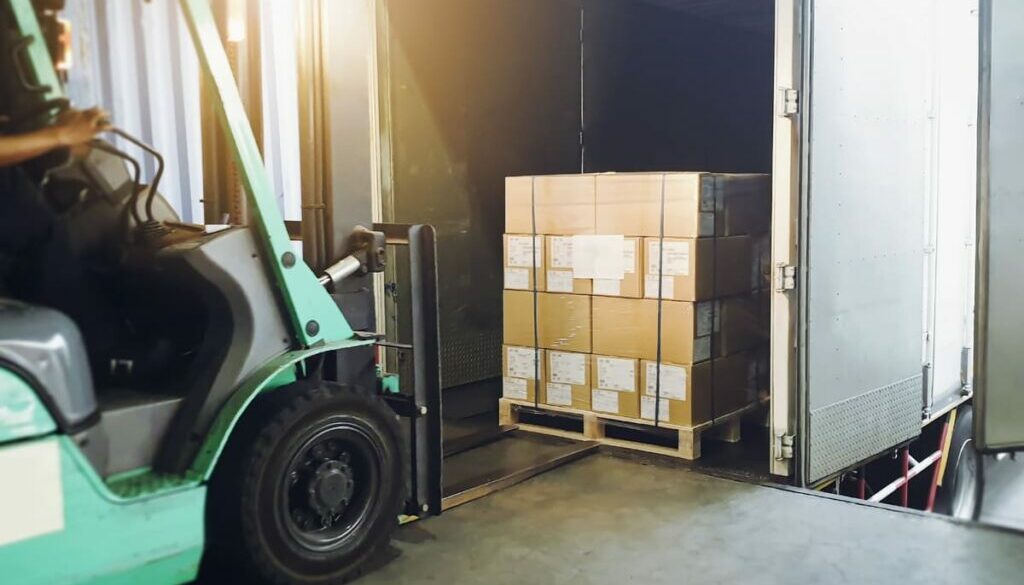
How to prepare goods to prevent damage during transport
Preparing goods properly is not a minor detail within the logistics chain. It is one of the decisions that most directly affects whether the shipment arrives in good condition, without incidents, claims, or extra costs. When goods are poorly packed, palletized without clear criteria, or handed over without proper labeling, the risk of impacts, shifting, deformation, and breakage increases significantly.
From a professional standpoint, goods protection should be understood as a complete process. It is not enough to place a product in a box and seal it with tape. The type of goods, their fragility, weight, transport method, expected handling, and route conditions all need to be assessed. Only then is it possible to choose the right packaging, immobilize the load, and reduce damage during transport to a minimum.
Below is a practical and professional guide to preparing goods safely and according to sound logistics standards.
Why goods get damaged before reaching their destination
Many incidents are not caused by one major impact, but by a series of avoidable mistakes. In logistics, damage often occurs when goods are not prepared to withstand handling, vibration, stacking, position changes, or repeated small shocks during transit.
Impacts, vibrations, humidity, and handling errors
During transport, goods may be exposed to loading and unloading, vehicle movement, braking, turns, stacking, and changing surfaces. If the outer packaging is not strong enough or if there are empty spaces inside, the product shifts and absorbs the impact.
Other common factors include humidity, friction between items, pressure caused by incorrect stacking, or poor weight distribution. With fragile products, electronics, heavy items, or irregularly shaped goods, these failures often result in visible damage or internal defects that are not always detected immediately.
For this reason, shipment preparation must anticipate risk. The goal is not simply for the package to be “closed,” but for it to withstand real transport conditions without compromising its integrity.
What to check before packing the goods
Before choosing the box, pallet, or cushioning material, it is advisable to inspect the goods first. This stage makes the difference between standard protection and truly effective protection.
Product type, fragility, weight, and dimensions
Textile goods do not require the same preparation as a mechanical part, an electronic device, a ceramic product, or a heavy industrial component. Packaging should be defined according to four basic factors: product type, fragility, weight, and volume.
If the goods are delicate, inner protection becomes just as important as outer packaging. If the product is heavy, the main issue is usually the structural strength of the packaging and the palletizing process. If it has an irregular shape, special attention must be paid to support points, voids, and internal immobilization.
When special protection is needed
Some goods require reinforced protection from the outset. This includes fragile products, high-value goods, items with exposed corners, heavy loads, stack-limited items, or packages sensitive to humidity.
In these cases, it is best to use stronger packaging, internal reinforcements, dividers, corner protectors, technical foam, or even wooden crates if transport conditions demand it. Preparation should be based on the actual risk, not only on the cost of the packaging material.
How to choose the right packaging for the goods
Packaging is the first protective barrier. It must be strong, proportional to the contents, and suitable for the handling the goods will face from origin to destination.
Cardboard boxes, wooden crates, and other resistant packaging
For standard goods, a high-quality corrugated cardboard box may be enough, as long as the board grade and strength match the weight of the contents. However, when dealing with heavy, delicate, or high-value products, it is advisable to move to stronger solutions such as double-wall cardboard, reinforced packaging, or wooden crates.
A common mistake is using a box that is too large for a small product or too weak for a heavy load. In both cases, protection is reduced. The ideal box provides strength without leaving unnecessary empty volume and without allowing the contents to move around inside.
How to prevent internal movement with protective filling
The inside of the package must prevent the goods from moving. If there is free space, the product may hit the walls of the package or collide with other items in the same shipment.
To avoid this, cushioning materials such as bubble wrap, foam, air pillows, protective chips, dividers, or custom void-fill systems should be used. For fragile goods, it is also important that the items do not touch one another and do not sit directly against the walls of the box.
The logic is simple: the less internal movement there is, the lower the risk of damage. Good packaging does not just wrap the product; it also immobilizes it and absorbs shocks.
How to close and seal a package so it does not open or deform
A suitable box can still fail if the closure is weak. Sealing should reinforce the structure of the package and prevent accidental opening during handling.
When to use H-taping
The H-taping method is one of the most recommended techniques for professional shipments. It consists of applying tape over the central seam of the flaps and reinforcing both side edges, forming an “H” shape on both the top and bottom of the box.
This system improves closure strength, helps maintain the shape of the package, and reduces the risk of opening caused by pressure or handling. To achieve a professional result, strong-quality tape should be used on a dry, clean, and properly closed surface.
Common sealing mistakes that cause incidents
Among the most frequent mistakes are using too little tape, choosing low-resistance adhesive tape, sealing deformed boxes, or improvising the closure of overloaded packages. It is also common to close a box correctly on the outside while leaving the contents poorly fitted inside, which ends up deforming the package during transit.
Closure should not be treated as the final gesture of the process, but as a control point. If there is excessive tension, bulging, or loss of shape when sealing the package, the packaging is probably not suitable.
How to palletize goods correctly
When the shipment is moved on a pallet, load stability becomes a top priority. Poor palletizing greatly increases the risk of tipping, crushing, or shifting during handling and transport.
Weight distribution and load stability
Goods should be placed evenly, with the base properly distributed and the heaviest items at the bottom. Lighter or more fragile items should go on top whenever the product allows it. In addition, goods should not overhang the pallet, because exposed edges are more vulnerable to impacts and reduce overall stability.
Stowage should aim for verticality, balance, and compactness. The more stable the logistics unit is, the easier it will be to move with a forklift or pallet truck without compromising safety.
Stretch film, straps, and pallet limits
Once the goods are placed, they must be secured with stretch film and, in some cases, with straps as well. Stretch film helps compact the load and reduce minor movement. Straps provide additional securing force for heavy or bulky goods.
It is also advisable to reinforce the load with corner protectors when necessary. These elements help distribute pressure, protect edges, and improve the overall stability of the unit.
A pallet should be neither underused nor overloaded. If the height, weight, or shape are not appropriate, the load becomes unstable and incidents are more likely during both handling and transport.
How to label goods for proper handling
Labeling alone does not prevent damage, but it does reduce handling mistakes. Clearly identified goods provide instructions to everyone involved in the logistics chain.
Fragile, orientation, and handling labels
Where appropriate, visible labels such as “Fragile,” “This Side Up,” “Do Not Stack,” or similar warnings should be used. These indications help warehouse and transport personnel handle the package with the required care.
That said, a label never replaces proper packaging. Marking a box as fragile does not make up for poor protection. The label is an informational aid, not a solution in itself.
Where to place labels so they are visible
Labels should be placed on clean, flat, and visible surfaces. Ideally, they should appear on more than one side of the package or pallet, while avoiding areas covered by opaque film, straps, or folds in the packaging. It is also important that the barcode, shipment reference, and delivery details can be read easily.
Poor labeling can lead to incorrect stacking, careless handling, or even shipment misrouting due to identification errors.
What documentation should be checked before shipping
A safe shipment does not depend only on physical packaging. Documentation also has a direct impact on service quality and on reducing incidents.
Weight, number of packages, and shipment details
Before handing over the goods to the carrier, it is important to verify the actual weight, dimensions, number of packages, shipment reference, and consignee information. These details must match the prepared shipment.
When declared weight does not match reality or when operational information is missing, handling errors, recalculations, delays, and in-transit incidents become more likely.
What information should be communicated to the carrier
In addition to the basic details, it is important to notify the carrier if the goods are fragile, non-stackable, sensitive to humidity, heavy, or require specific handling. The clearer the operational information, the less room there is for misinterpretation.
From a professional perspective, logistics preparation does not end when the package is sealed; it ends when the information accompanying the goods is also correct.
Common mistakes when preparing goods
Most repeated transport incidents come down to a small number of very specific mistakes. Identifying them makes them much easier to avoid.
Insufficient packaging
One of the most common mistakes is using a weak box, a box that is too large, or packaging that is not suitable for the type of product. Another common issue is skipping internal cushioning, especially for fragile or irregularly shaped goods.
Poor palletizing
Another frequent cause of damage is building unstable pallets, with excessive height, badly distributed weight, or packages that overhang the edges. A poorly supported load may collapse during handling or shift during transit.
Incomplete labeling or documentation
When handling instructions, visible references, or correct shipment data are missing, the probability of operational mistakes rises sharply. In transport, small administrative errors often turn into major physical incidents.
Final checklist for preparing goods without damage
Before considering the shipment ready, this final control should be reviewed:
- The goods have been assessed according to fragility, weight, volume, and shape.
- The outer packaging is strong and proportional to the contents.
- The inside contains no empty spaces and allows no movement.
- The closure is reinforced and properly sealed.
- The palletized load is stable, centered, and does not overhang.
- Stretch film or strapping has been applied where needed.
- Handling labels are visible and consistent.
- The barcode and shipment identification are easy to read.
- The weight, number of packages, and shipment details are correct.
- The goods show no humidity, openings, deformation, or weak points before collection.
Conclusion
Preparing goods to prevent damage requires method, judgment, and operational awareness. It is not only about packing, but about protecting the load as a whole: choosing the right materials, immobilizing the contents, ensuring overall stability, identifying the shipment correctly, and reviewing every detail before dispatch.
Transport agencies and logistics operators know that many incidents are prevented before the vehicle even starts moving. Well-prepared goods reduce breakage, claims, delays, and unnecessary costs. For that reason, investing time in professional shipment preparation is not a secondary task, but an essential part of logistics service.