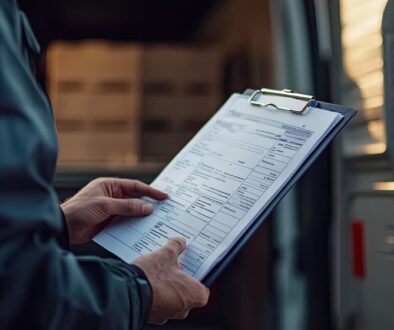

Road freight transport contract: a practical guide for shippers and companies
As a road transport company, the team commits to something very specific: collect the goods, keep them safe, and deliver them to destination for an agreed price. That agreement is the road freight transport contract. It can be in writing (recommended) and the usual proof is the waybill —including its electronic version.
Operationally, the key is to make everything clear before the truck docks: what is being moved, from–to, when, under which conditions, and who bears each cost and responsibility. Get this right and you cut down on incidents, price disputes, and claims.
What it is and who’s involved (shipper, carrier, consignee, consignor, freight forwarder)
Working definition: the shipper hires and pays for transport; the carrier (the transport company) undertakes to move the goods and deliver them; the consignee receives them. Sometimes a consignor physically hands over the goods on the shipper’s behalf, and a freight forwarder/transport operator may contract in its own name.
How the company applies this
- Acts as contracting and performing carrier unless a subcontractor is expressly identified; if so, the performing carrier is named and control standards are kept.
- At delivery, traceability is prioritised (POD with stamp/signature and, on request, photos of packages and seals).
- For incidents, the team records specific reservations on the spot (e.g., “1 pallet with broken strap, visible dent at corner”).
Waybill: when it’s required, what it includes, and e-waybill
The waybill evidences the contract and details the service. Domestically, it’s not always compulsory to carry it on board, but it’s best practice. For dangerous goods (ADR) and other special cases, specific documentation is mandatory. For international road transport, the standard document is the CMR consignment note.
Recommended content checklist
- Goods description: nature, quantity, number of packages, weight/volume, packing, marks.
- Parties’ details: shipper, carrier, consignee (tax IDs and addresses).
- Origin/destination & timing: place/date of pickup; place/date or delivery window.
- Price & charges: freight price, foreseeable surcharges (waiting time, second delivery, tolls) and who pays (prepaid/collect).
- Instructions: administrative formalities (customs, CITES, sanitary), dock schedules, loading/unloading means, whether goods are dangerous (ADR class, UN number, packing group).
- Remarks/Reservations: apparent condition, seals, temperature for reefers, etc.
- Signatures: shipper/consignor at pickup and consignee at delivery (e-signature accepted).
Electronic waybill (operational recommendation)
The company uses an e-waybill integrated into its TMS: data are validated before pickup, signed on tablet/phone, and shared in real time with the customer—shortening disputes and speeding up invoicing.
Essential fields in practice
- Identification of parties (including the performing carrier if any).
- Core shipment data (nature, packages, weight/volume).
- Route basics (origin, destination) and deadlines.
- Freight price and payer.
- Relevant instructions (e.g., ADR or admin procedures).
Waybill or control document? Differences and cases
- Waybill: proves the contract and sets conditions.
- Control document: administrative requirement in certain cases during inspections.
The company provides both where applicable and integrates them in the same digital flow.
How to contract road transport in 4 steps (the company’s method)
1) Pre-study and cargo requirements
Before quoting, the team requests a product sheet, dimensions/weight, packing type, and constraints (stackable/non-stackable, ADR, temperature). This defines the right vehicle and anticipates site access and handling means.
Micro-case: declared 1,200 kg but actual 1,480 kg at loading → discrepancy documented, rate adjusted by weight bracket, customer informed before departure.
2) Request & compare proposals (price, fleet, lead times, surcharges)
Offers specify: base price, surcharges (waiting time, ADR, second delivery), committed transit, and optional insurance.
Practice: each quote includes a surcharge map and limits (e.g., 30 minutes free waiting at loading/unloading, then hourly rate).
3) Terms agreement and pickup reservations
Delivery windows, documentation, and right to visual inspection at pickup are defined. If packing is insufficient or a package is damaged, a reservation is written on the waybill and the customer is notified.
Micro-case: loosely wrapped pallet → reservation “insufficient packing; risk of product shifting”, photo in app, shipper acknowledgement.
4) Tracking, incidents, and waiting times
GPS tracking and digital PODs. For incidents: “Notify–Decide–Execute” protocol: (1) notify the shipper with evidence (photos/temperature), (2) follow reasonable instructions under the right of disposition, (3) execute and document extra costs if applicable.
Micro-case: consignee closed → offer second delivery or return to origin with an approved quote.
Ongoing/continuing transport contract: when it fits and what to include
Ideal for recurring volumes. Benefits: stable pricing, fleet priority, and service KPIs (OTD, incidents per thousand shipments).
Recommended clauses
- Scope & volumes (routes, frequency, seasonality).
- Pricing & review (fuel/toll adjustment mechanism).
- Service levels (transit times, max POD time, incident handling).
- Documentation (e-waybill, CMR when applicable).
- Insurance (statutory and optional all-risk).
- Contacts & escalation (ops/finance, response times).
Liability and limits: loss, damage, and delay (with examples)
The carrier is liable for the goods from pickup to delivery, with exceptions (inherent vice, inadequate packing by shipper, shipper’s instructions, force majeure).
Company handling
- Prevention: check packages/seals and take photos at origin/destination.
- Reservations: always specific and dated.
- Communication: apparent damage → consignee notes it on signing; concealed damage → customer notifies within the legal time.
- Limits: under international CMR, liability is weight-based; the company advises beforehand and offers all-risk insurance where cargo value warrants it.
International road transport: CMR in 5 minutes
For shipments with origin and destination in different countries (at least one party to the Convention), the CMR consignment note is used. It mirrors the domestic waybill but adds specific boxes (customs instructions, Incoterms when the customer uses them, etc.).
Best practices
- Check customs paperwork before loading.
- Confirm declared value and insurance coverage.
- Identify dangerous goods and attach ADR documentation.
- Keep signed digital copies for claims and audits.
FAQs
Is it mandatory to keep the waybill in the vehicle?
Not always; it’s recommended. For ADR and certain cases, specific paperwork is mandatory.
Is e-signature valid?
Yes—full evidential value for pickup and delivery.
Who pays the freight?
Defined in the waybill: prepaid (shipper) or collect (consignee).
What if the consignee refuses delivery?
The carrier contacts the shipper (right of disposition) for instructions: second delivery, storage, or return. Extra costs are documented and approved before execution.
Conclusion
A clear contract, a complete waybill, and an orderly operation are the three pillars of road transport. The company’s promise: accurate information upfront, precise reservations, and full traceability.